When Electricity Learns Logic
How does electricity perform logic? Learn how transistors become logic gates and how simple operations form the foundation of computing.

Transistors control whether electricity flows. Logic gates use transistors to enforce conditions. But what conditions, exactly? What rules? This is where the foundation of computing becomes concrete.
Rules Made Physical
Every decision system follows rules. Access granted if both credentials are valid. Alert triggered if either condition is met. Output reversed when the input is active. Computers enforce these rules not through software at the base level, but through physical circuits. Electricity enters. A rule is applied. Electricity either continues or stops. Four fundamental gates handle most of the work.
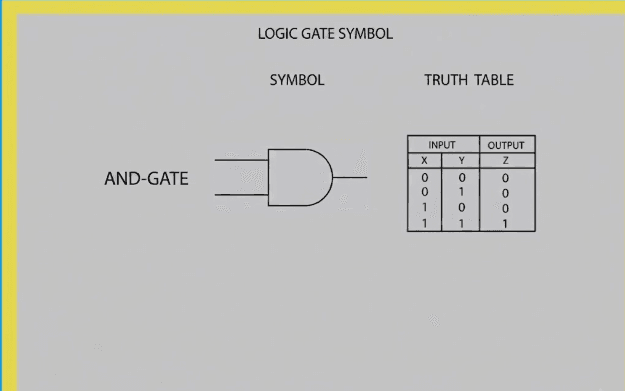
The AND Gate
Imagine a water pipe with two taps placed one after the other. For water to reach the bucket at the end, both taps must be open. If either tap is closed, the water cannot pass through.
This is exactly how an AND gate works.
Both conditions must be true before an output is produced.
Think about unlocking your online banking account. Entering the correct username is not enough. Entering the correct password is not enough. Both conditions must be satisfied before access is granted.
The AND gate follows the same principle. It asks a simple question:
“Are both conditions true?”
If the answer is yes, electricity flows. If the answer is no, it doesn’t.
The OR Gate
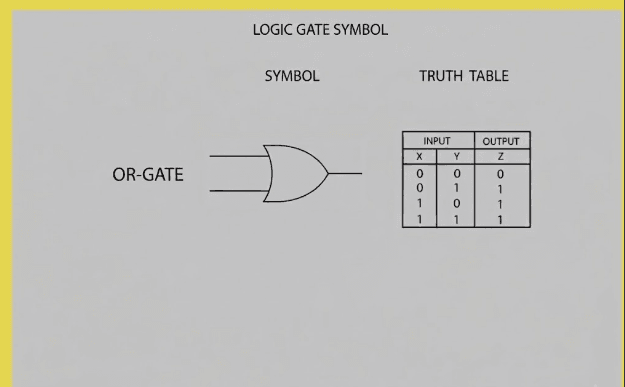
Now imagine a bucket connected to two separate water pipes. Water can reach the bucket through either pipe. If the first pipe is open, water arrives. If the second pipe is open, water arrives. If both pipes are open, water still arrives.
This is the logic behind an OR gate.
Unlike the AND gate, only one condition needs to be true.
Think about entering a building. You might unlock the door using a key card or a fingerprint scanner. Either option works. The system only needs one valid condition to grant access.
An OR gate asks:
“Is at least one condition true?”
If the answer is yes, electricity flows.
The NOT Gate
Some rules work in reverse.
Imagine a security guard whose only job is to reverse every decision. Whenever someone hands him a green card, he changes it to red. Whenever someone hands him a red card, he changes it to green.
That is essentially what a NOT gate does.
If electricity enters the gate, the output is turned off. If electricity does not enter the gate, the output is turned on.
The NOT gate always flips the result.
It takes a condition and produces the opposite condition.
Although simple, this ability to reverse decisions is extremely important in computing.

The XOR Gate
The XOR gate behaves a little differently.
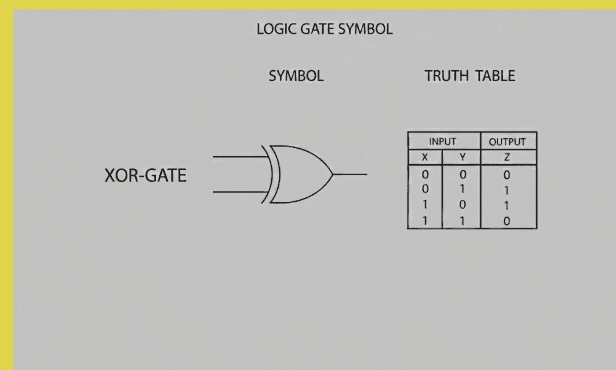
Imagine a room with two light switches controlling the same light. The light should turn on only when exactly one switch is flipped. If neither switch is on, the room remains dark. If one switch is on, the light turns on. But if both switches are turned on at the same time, the light turns off again.
This is the idea behind an XOR gate.
The name stands for “exclusive OR.”
Unlike a normal OR gate, which accepts one condition or both conditions, an XOR gate accepts only one condition. The moment both conditions become true together, the output disappears.
In simple terms, the XOR gate asks:
“Is exactly one condition true?”
If yes, electricity flows.
If no, it doesn’t.
Why Logic Gates Matter
At first glance, these gates seem almost trivial.
AND.
OR.
NOT.
XOR.
They look like rules that a child could understand.
And that is precisely the point.
Computers are not built from complicated ideas. They are built from simple ideas repeated billions of times.
A single logic gate can enforce only one small rule. But a modern processor contains billions of transistors arranged into countless logic gates. Those gates work together to compare values, make decisions, perform calculations, and process information. NAND to Intelligence shows how this progression from simple logic gates leads toward AI.
The spreadsheet you use at work. The website you browse. The navigation system in your phone. The artificial intelligence systems that generate text and images. All of them ultimately depend on enormous networks of these tiny rule-following circuits.
Where Computation Begins
In our first article, we defined computation as the transformation of information according to rules.
We then discovered that transistors allow electricity to be controlled.
Now we can connect those ideas together.
Logic gates are where rules become physical.
A logic gate is not software. It is not a mathematical formula. It is a physical circuit built from transistors. Electricity enters, a rule is applied, and electricity leaves.
This is one of the most important moments in understanding computers because it reveals how computation emerges from electricity.
Not through intelligence.
Not through magic.
But through rules.
A logic gate is simply a rule made physical.
Where Computation Becomes Real
In the first article, we defined computation as the transformation of information according to rules. Logic gates are where that definition becomes physical not a formula on paper, but a circuit built from transistors where electricity enters, a rule is applied, and electricity leaves. This is where computation stops being abstract. It is happening, in hardware, billions of times per second, inside every device running any software.
These gates operate on one thing: electrical states. On or off. 1 or 0. The next question is how systems that only understand two states can represent words, images, video, and language. The answer is binary — the language computers use to encode the world.
KEY TAKEAWAY
Before you move on, pause with the central idea from this lesson and connect it to the next step in your learning path.


